What Roofers Look for That Homeowners Miss
Learn what professional roofers check that homeowners often miss and how early detection prevents costly…
Whether you need a flat roof, shingles, or a metal roof, UNITED is here to help. Ask us about our insurance claims services today!
If your roof is in need of repairs, replacement, or a complete overhaul, UNITED is here for you. Ask us about our remodeling & additions services today!
United Contracting & Roofing is a local, family owned and operated business. Our focus is long lasting relationships with our clients with quality service.
Most homeowners do a quick visual check of their roof from time to time. You might glance up after a storm, look for missing shingles, or check the gutters while cleaning them out. Those habits are helpful, and they do catch some issues.
What they don’t show is how the roof is actually performing. A roof is a system, not just a surface. The parts that fail first are often the ones you can’t see from the ground. That’s where a professional inspection works differently. It goes beyond appearance and focuses on how water moves, where materials are stressed, and how the entire system is holding up over time.
One of the first things a roofer considers is whether the visible issue matches the actual problem. Water rarely enters and exits at the same point. A small ceiling stain might trace back to a flashing detail several feet away, or even higher up the roof.
Instead of focusing only on what’s visible, a great roofing inspector will follow the path water would take. They walk the roof and mark every concern, noting issues that homeowners cannot see from the ground. This hands-on, intentional approach often reveals issues that are not obvious during a quick visual check.
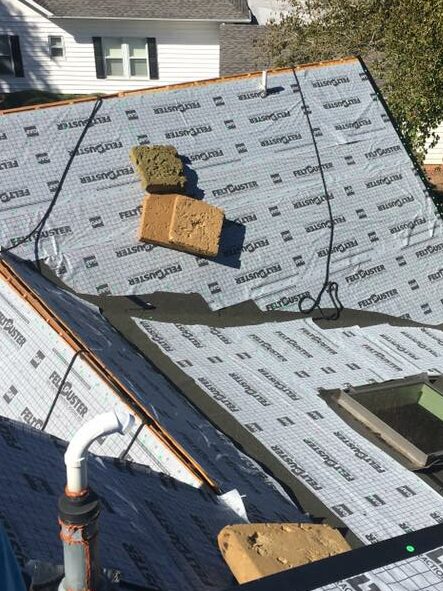
Areas where the roof surface is interrupted are some of the most important to evaluate. Vents, chimneys, skylights, and pipe penetrations all require precise sealing to keep water out. Over time, these areas experience movement from temperature changes and weather exposure. Sealants can shrink or crack, and flashing can shift slightly.
From the ground, these areas usually look unchanged. Up close, even small separations can be enough to allow water in during a storm. Because these transitions are critical points in the roof system, they are often the first place a professional will inspect closely.
Occasionally, your roof’s shingles look intact…but conditions underneath tell a different story. Roofers pay close attention to how the system is performing below the surface, especially in areas where water may have entered previously.
The roof deck and underlayment provide the real barrier against moisture. If those layers begin to absorb water, the damage spreads quietly. This is why a roof can appear solid from the outside even if underlying materials are starting to deteriorate.
A professional inspection looks for subtle indicators that suggest this type of hidden issue, even before it becomes visible inside the home.
The attic often provides the clearest picture of roof performance. Changes in moisture, airflow, and temperature tend to show up here first. If we suspect structural issues due to water penetration, our experienced inspectors can check your attic for signs like darkened wood, damp insulation, or slight staining along the decking. These are early indicators that moisture is entering or that ventilation is not working as it should.
They also evaluate airflow. A roof that cannot properly release heat and moisture will age faster and become more vulnerable to damage. Even if the roof looks fine from the outside, poor attic conditions can shorten its lifespan significantly.
Water management is one of the most important parts of roofing performance, which is why roofers pay close attention to areas where water naturally collects or changes direction. Valleys, roof edges, and low-slope sections tend to carry the highest volume of water during storms. If materials in these areas begin to wear down or shift, problems can develop quickly.
Gutters also play a role. If water is not moving efficiently off the roof and away from the home, it can back up into vulnerable areas. A small drainage issue can create ongoing exposure that leads to gradual damage over time.
Some of the most important parts of a roof are also the easiest to overlook. Fasteners, sealants, and connection points hold the system together and keep it sealed. Over time, nails can loosen slightly, and sealants can dry out or crack. These changes are subtle and not visible from a distance, but they can create entry points for water.
Many roofing problems develop slowly. They don’t start with major damage but instead begin with small changes that build over time. From the ground, a roof can look uniform and intact even when small areas are beginning to fail. Without close access and a trained eye, those changes are easy to overlook.
Paying attention to your roof from the ground is still a smart habit. It helps you notice obvious changes and respond quickly when something looks off. At the same time, a professional inspection provides a different level of insight. It looks at the areas you can’t easily access and evaluates how the system is functioning as a whole.
United Contracting & Roofing provides complimentary inspections for homeowners across northern Georgia and upstate South Carolina. Our team looks beyond the roof’s surface to identify early signs of wear, moisture movement, and underlying damage.
If it has been a while since your last inspection, or if you want to better understand how your roof is performing, scheduling a visit is a practical next step. A closer look today can help prevent bigger problems down the line.
Learn what professional roofers check that homeowners often miss and how early detection prevents costly…
A roof can look fine and still hide damage. Learn what to check and why…
Common roof repair myths can cost you. Learn what actually happens and how to make…
Reach out to us today and get a FREE inspection on your roof.