Compare Roofing Materials: Asphalt vs. Metal vs.…
Compare asphalt, metal, and architectural roofing materials to see what performs best in the Southeast…
Whether you need a flat roof, shingles, or a metal roof, UNITED is here to help. Ask us about our insurance claims services today!
If your roof is in need of repairs, replacement, or a complete overhaul, UNITED is here for you. Ask us about our remodeling & additions services today!
United Contracting & Roofing is a local, family owned and operated business. Our focus is long lasting relationships with our clients with quality service.
Roofing materials do not perform the same in every climate. What works well in a dry region with mild weather may age much differently in the Southeast, where roofs deal with constant humidity, heavy rain, intense sun exposure, and seasonal storms. For homeowners in northern Georgia and upstate South Carolina, choosing a roof is not just about appearance or price. It is about how the material handles years of moisture, heat, wind, and temperature swings without creating unnecessary maintenance issues down the road.
That is why conversations about comparing roofing materials are rarely as simple as “this one lasts longer” or “that one costs less.” The best roofing system depends on how long you plan to stay in the home, how much maintenance you are comfortable with, and what kind of long-term performance you expect from the investment.
The climate in the Southeast places steady pressure on roofing systems throughout the year. Long summers expose roofs to constant UV radiation and high attic temperatures, both of which gradually break down roofing materials over time. Humidity creates conditions where algae growth and moisture retention become common, particularly on shaded roof sections. Add in seasonal storms, high winds, and occasional freeze-thaw cycles during winter, and roofs in this region experience a broad range of stress year after year.
Because of this, durability alone is not the only consideration. Consistency matters too. Roofing systems that manage moisture effectively and age predictably tend to perform better over the long term than materials chosen purely for aesthetics or upfront savings.
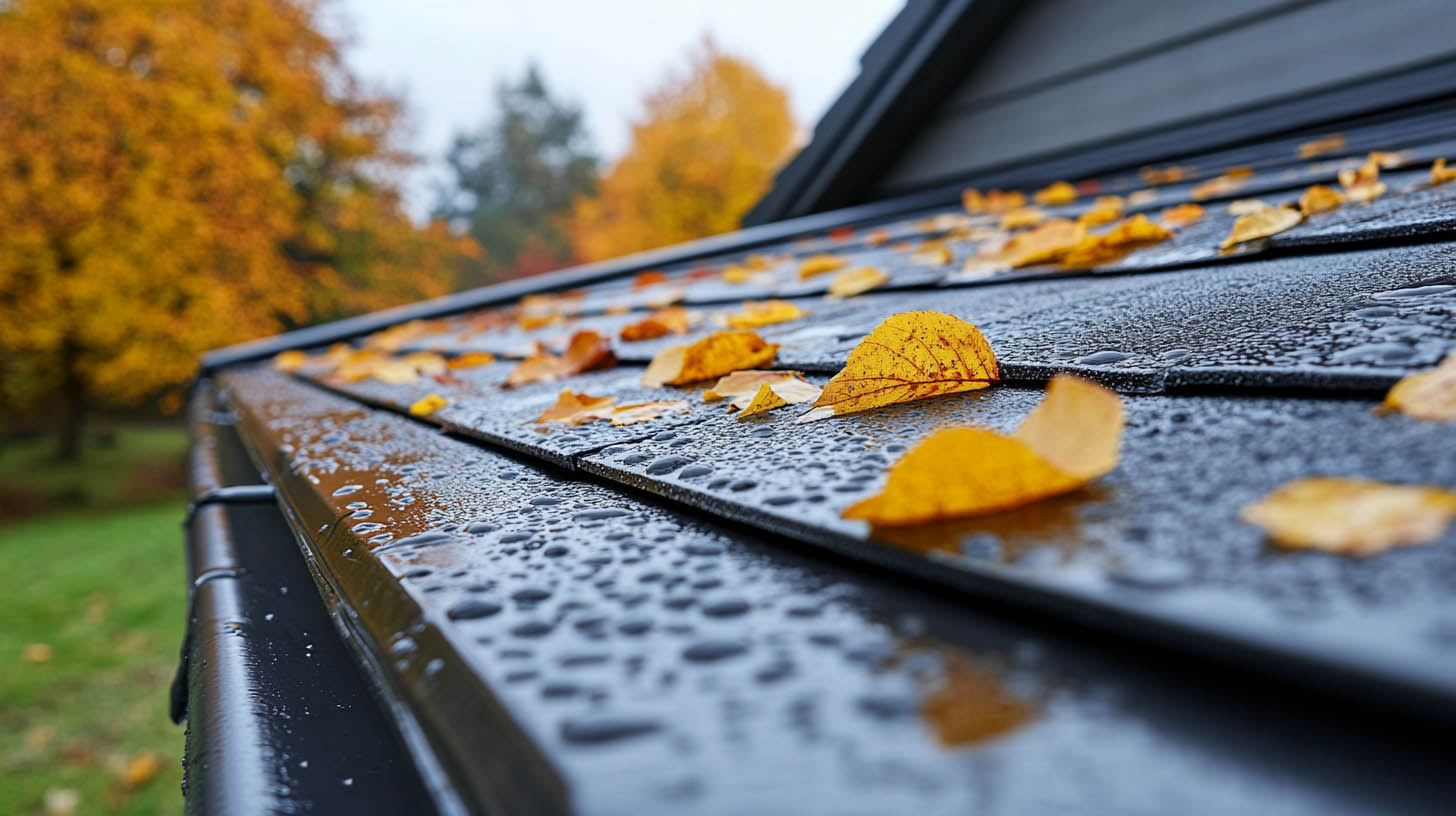
Traditional asphalt shingles remain widely used because they offer a practical balance of affordability and functionality. For many homeowners, especially those working within a tighter budget or planning to move within the next several years, they remain a reasonable option. Repairs are generally straightforward, replacement materials are easy to source, and installation tends to be less expensive than premium systems.
At the same time, the Southeast climate can be hard on standard asphalt shingles. Years of heat exposure gradually dry the materials out, while humidity encourages algae staining and moisture-related wear. Over time, shingles may begin losing granules more quickly or show signs of aging sooner than homeowners expect, especially on roof sections that receive direct afternoon sun or prolonged moisture exposure.
That does not mean standard asphalt shingles are a poor choice. It simply means homeowners should approach them with realistic expectations about lifespan and long-term maintenance in this climate.
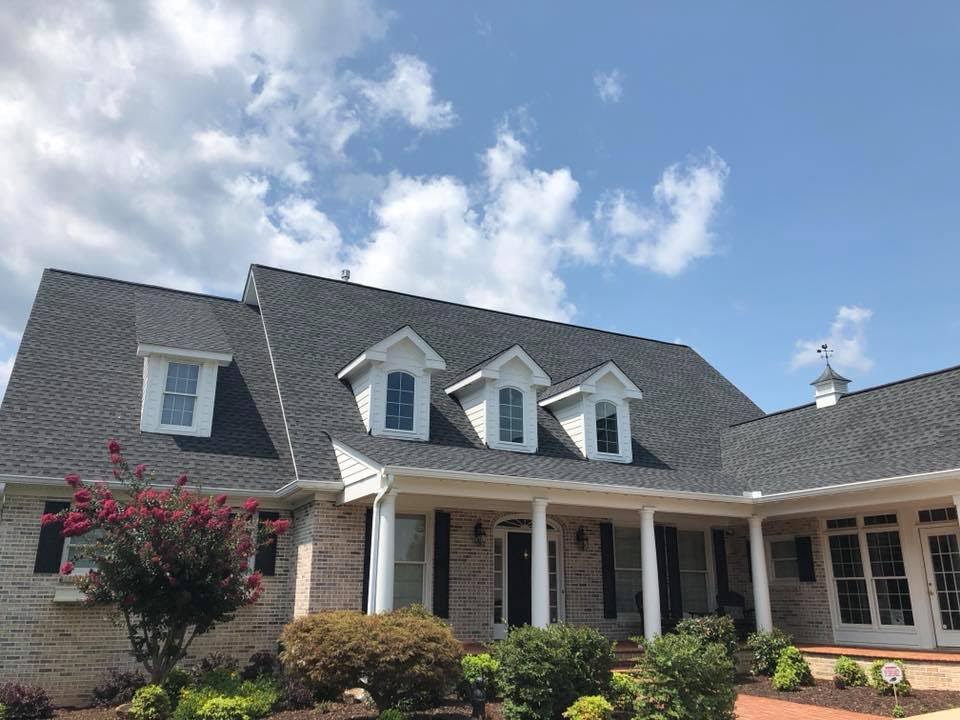
Architectural shingles have become one of the most common choices across northern Georgia and upstate South Carolina because they offer a strong middle ground between cost and durability. Compared to traditional three-tab shingles, they are thicker, heavier, and designed to withstand weather conditions more effectively. That added thickness also creates a more dimensional appearance, which gives the roof greater visual depth and curb appeal.
However, their performance advantages are what make them especially appealing in the Southeast. Architectural shingles generally provide better wind resistance and tend to age more gradually under constant heat and moisture exposure. Many products also include algae-resistant technology that helps reduce the dark streaking commonly seen on roofs in humid areas.
For many homeowners, this category hits the balance they are looking for. Architectural shingles provide stronger long-term performance and durability improvements without moving into the significantly higher upfront investment associated with metal roofing.
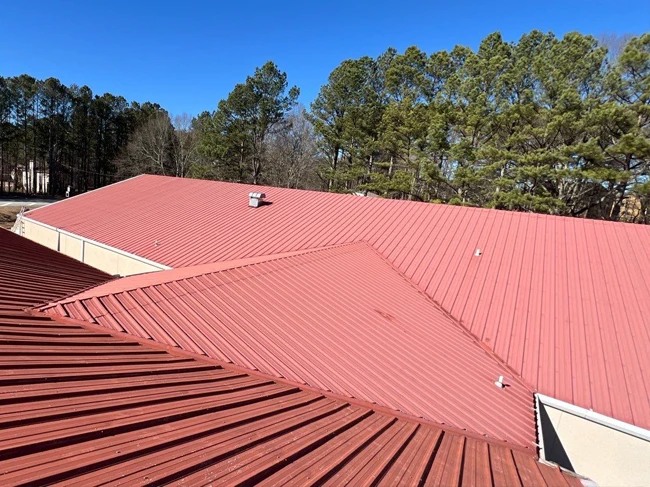
Metal roofing performs exceptionally well in the Southeast for one major reason: it handles moisture differently than shingle systems. Instead of absorbing and holding moisture over time, metal sheds water quickly and resists many of the long-term wear patterns that affect traditional roofing materials in humid climates. It also performs well during heavy storms and tends to maintain its integrity better during high winds, which makes it appealing in areas that regularly experience severe weather.
Metal roofing is also known for its longevity. A properly installed metal roof can last decades longer than many traditional roofing systems, which makes it attractive for homeowners planning to stay in their homes long term. Many homeowners also appreciate the energy efficiency benefits, especially during long Southern summers where reflective metal surfaces can help reduce heat absorption.
However, it’s important to remember that metal roofing requires careful installation and planning. Ventilation and condensation management are especially important in humid climates, and installation quality has a major impact on long-term performance. The upfront investment is also higher than many shingle systems, so homeowners need to weigh initial cost against long-term durability and maintenance expectations.
One of the biggest misconceptions in roofing is that material alone determines performance. In reality, installation quality often matters just as much as the product being installed. A premium roofing material that is installed poorly can develop issues much sooner than a standard system installed correctly.
Ventilation, flashing details, drainage design, and attic airflow all influence how a roof performs over time. Two homes with the same shingles can age very differently depending on how well those supporting systems were designed and maintained. That’s why a thorough inspection and a quality installation process matter so much, regardless of which material you choose.
Since priorities differ from one household to another, the best roofing for your home is a matter of balancing the options. Some homeowners want the lowest upfront investment. Others are focused on longevity, energy efficiency, or minimizing maintenance over time.
For many homes in the Southeast, architectural shingles offer the strongest overall balance of performance, appearance, and value. Metal roofing often delivers the best long-term durability, particularly for homeowners planning to stay in place for decades. Standard asphalt shingles still serve an important role as a practical option for shorter-term ownership plans or tighter budgets.
The best roofing system is ultimately the one that fits both the home and the homeowner’s long-term goals.
Roofing decisions become much easier when you understand how each system performs in your specific environment. United Contracting & Roofing works with homeowners across northern Georgia and upstate South Carolina to evaluate those factors and recommend roofing solutions that make sense for the property, the budget, and the years ahead.
Our complimentary inspections and consultations help homeowners compare roofing materials clearly, without pressure or guesswork. Whether you are considering architectural shingles, metal roofing, or another roofing system entirely, the goal remains the same: installing a roof that performs reliably in the climate it faces every year.
Compare asphalt, metal, and architectural roofing materials to see what performs best in the Southeast…
Small roof maintenance choices today can prevent major repairs later. Learn what matters over the…
Plan ahead for a roof replacement and stay in control. Learn practical steps to budget…
Reach out to us today and get a FREE inspection on your roof.