Fascia, Soffit & Drip Edge: Protecting Your…
Learn how fascia, soffit, and drip edge work together to manage water, support ventilation, and…

Whether you need a flat roof, shingles, or a metal roof, UNITED is here to help. Ask us about our insurance claims services today!
If your roof is in need of repairs, replacement, or a complete overhaul, UNITED is here for you. Ask us about our remodeling & additions services today!
United Contracting & Roofing is a local, family owned and operated business. Our focus is long lasting relationships with our clients with quality service.
Most of what you see when you look at your roof is the finished surface: shingles or metal, flashing around penetrations, and the edges that meet your gutters. Underneath those materials is a part of the roofing system that you rarely see, but you depend on it every day.
Roof decking provides the solid structural surface beneath your roofing materials. When that decking gets wet, the first question is usually whether it needs to be replaced.
The answer depends on what happened to the wood and why it got wet in the first place. A brief exposure to moisture does not necessarily ruin roof decking. In a completed roofing system, however, decking should normally stay dry. Moisture getting through the rest of the roofing system and it is a sign that something needs attention.
Roof decking, sometimes called roof sheathing, spans the framing of your roof and creates the surface that supports the roofing system above it. Residential roof decking commonly consists of plywood or OSB (oriented strand board).
Plywood is made from thin layers of wood bonded together. OSB is an engineered wood panel made from strands of wood arranged in layers and bonded together. Both products are widely used as structural sheathing.
Your underlayment sits over this decking, followed by shingles or another finished roofing material. Roofing fasteners ultimately depend on the deck beneath those layers for secure attachment. That makes the condition of the decking important even though you may never see it from outside your home.
In a completed roofing system, rain should not reach the roof decking. Shingles or other roofing materials provide the primary protection from the weather, while components such as flashing and underlayment provide additional layers of protection.
If one of those components becomes damaged or fails, water may find a path farther into the system. Storm-damaged or missing shingles can expose vulnerable areas. Failed flashing can allow water to enter around chimneys, vents, valleys, and other transitions. Punctures or damage to the underlayment can also give water a path toward the decking.
Water can reach the decking from below, too.
Warm, moisture-laden air from the home can enter the attic and meet a cold roof deck. Under the right conditions, that moisture can condense on the underside of the decking. Poor attic ventilation or other moisture-management problems can allow the cycle to happen repeatedly.
This is one reason finding wet decking is only part of the diagnosis. A roofer also needs to determine where the moisture came from.
No. There is an important difference between wood that has gotten wet and wood that has deteriorated because of moisture.
Plywood and OSB used for structural sheathing are manufactured to tolerate some exposure to moisture. This is particularly important during construction. A newly built home, addition, or roof may experience rain before the complete roofing system is installed. Getting caught in a rain shower does not make those structural panels unusable as the wood is able to dry quickly.
The situation is different once a finished roof is in place. If rainwater reaches the top of the decking beneath an existing roof, something allowed that water to get through the roofing system. The decking might dry between storms, especially when the attic has adequate ventilation, but the leak that allowed the water inside may still be there. The next storm can start the process again.
Condensation can follow a similar pattern. Moisture may collect on the underside of the decking and later dry as temperatures and humidity change. If the conditions causing that condensation continue, so can the moisture exposure.
Over time, prolonged or repeated moisture can create conditions for decay and deterioration. The important questions are whether the decking has dried, whether it remains structurally sound, and whether the source of the moisture has been corrected.
Sometimes there are clues that moisture has reached the roof deck before the roofing materials ever come off. An attic inspection may reveal dark staining or visible signs of moisture along the underside of the decking. Damp insulation or evidence of an active leak can provide additional clues that water has entered the area.
Staining alone does not necessarily tell you whether a panel needs replacement, as it may be evidence of an older moisture event rather than current structural damage. The condition of the wood matters. Decking that has experienced more serious deterioration may soften, swell, delaminate, flake, sag, or otherwise lose the solid surface the roofing system requires. An inspector will also need to consider whether the decking can still hold roofing fasteners properly, or if the decking must be replaced as part of the rehabilitation project.
A roof inspection can tell us a great deal about the condition of a roofing system, but it cannot make every hidden surface visible.
Think about the layers of a typical asphalt shingle roof. The shingles are on top. Underneath them is the underlayment. The decking sits below both.
A contractor may see warning signs from the roof surface or inside the attic, but the entire top surface of the decking remains covered until the old roofing materials are removed.
During a roof replacement, the existing materials are torn off before the new system is installed. At that point, the decking is exposed and the roofing crew can see areas that were previously inaccessible.
This is why a contractor may discover damaged decking after a replacement project has already begun. It does not necessarily mean the damage should have been obvious during the initial inspection. In some cases, removing the old roof provides the first opportunity to see the full extent of the problem.
It is also why decking can affect the final cost of a roof replacement. A contractor can identify known problem areas beforehand, but hidden deterioration cannot always be assessed accurately until the top layers of roofing are removed.
New roofing materials need a sound surface underneath them. Shingles are fastened through the roofing layers and into the wood decking below. Manufacturers specify that the roof deck needs adequate nail-holding capacity so those fasteners can do their job.
If the decking has softened, rotted, delaminated, or otherwise deteriorated, covering it with new roofing materials does not restore its strength. The new shingles would still depend on the compromised wood underneath them. The underlayment also needs an appropriate surface for installation. Roofing manufacturers call for a properly prepared deck, and installation instructions commonly require the wood deck to be dry.
In other words, replacing the visible portion of the roof while leaving compromised decking underneath would leave the new roofing system attached to a damaged substrate. Addressing deteriorated decking first gives the new roofing materials the solid surface they are designed to have.
Once the old roofing materials have been removed, the crew can inspect exposed areas and identify decking that needs attention. Damaged sections can then be replaced or repaired as appropriate before the new underlayment and finished roofing materials are installed.
This step may add work that could not be included precisely in the original scope because the affected decking was hidden. A good roofing estimate should help homeowners understand which conditions can be identified beforehand, and which may only become clear after tear-off.
Finding damaged decking can be frustrating, particularly when you were not expecting another repair. Leaving compromised wood underneath a brand-new roof, however, does not make the underlying problem disappear.
Replacing damaged decking addresses the wood itself, but it does not explain why the damage happened. If water entered through failed flashing, damaged shingles, a puncture, compromised underlayment, or another opening in the roofing system, that pathway also needs to be corrected. If condensation caused the moisture, the attic’s ventilation and moisture conditions need to be evaluated. Otherwise, replacement decking may eventually face the same problem.
At United Contracting & Roofing, we look at the roofing system as a whole. Our complimentary roof inspections can help identify signs of leaks, storm damage, and other problems before they progress, while the tear-off process during a roof replacement gives our crews the opportunity to inspect the decking before new roofing materials are installed.
If you have noticed signs of a leak, moisture in your attic, or other changes that have you wondering what is happening underneath your roof, schedule a complimentary inspection with United Contracting & Roofing. Finding the source of the moisture is the first step toward determining what your roof actually needs.
Learn how fascia, soffit, and drip edge work together to manage water, support ventilation, and…
Wet roof decking does not always mean rot, but the source matters. Learn how moisture…
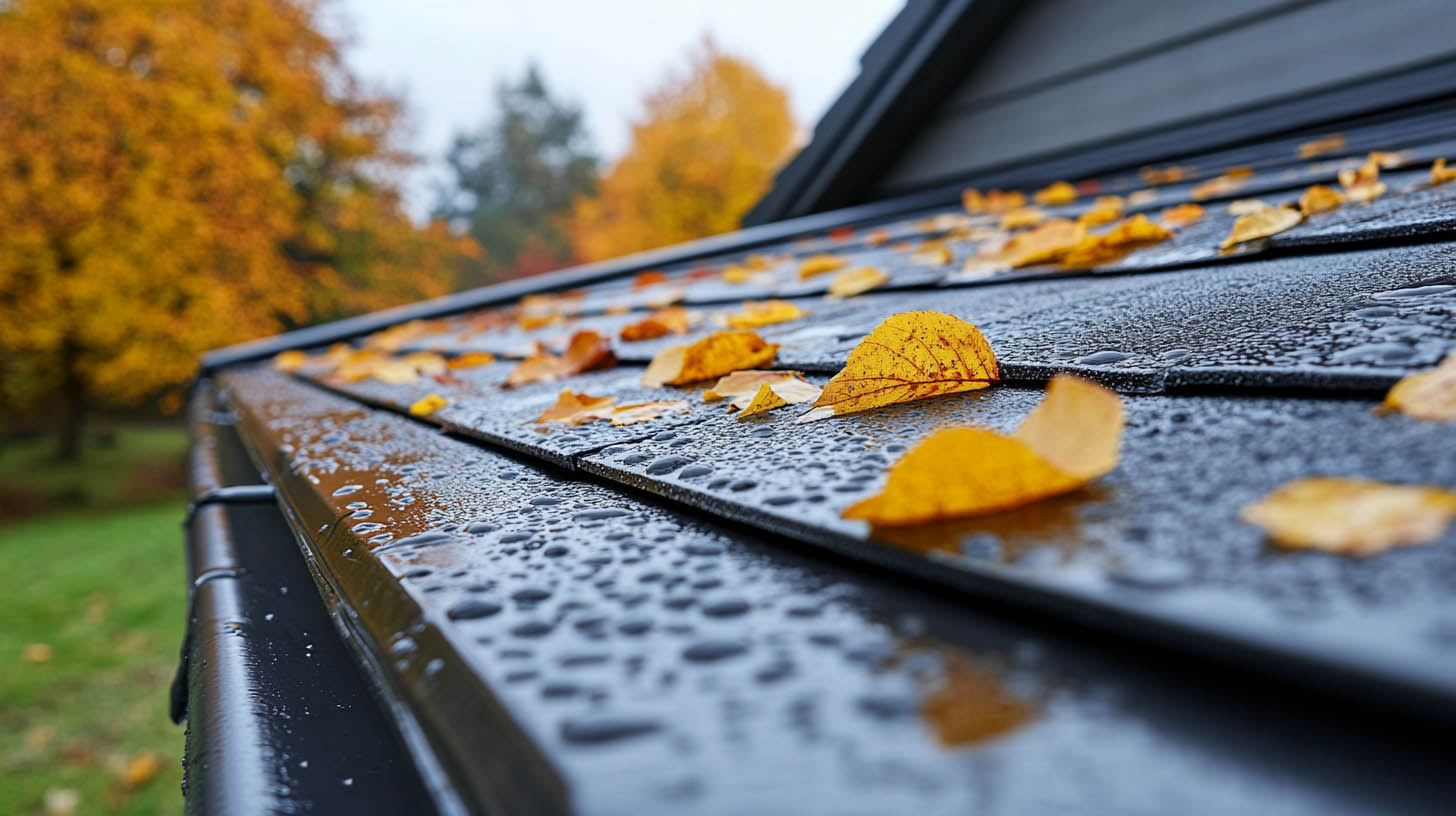
Water behind your gutters can point to drip edge, fascia, gutter, or drainage problems. Learn…
Reach out to us today and get a FREE inspection on your roof.