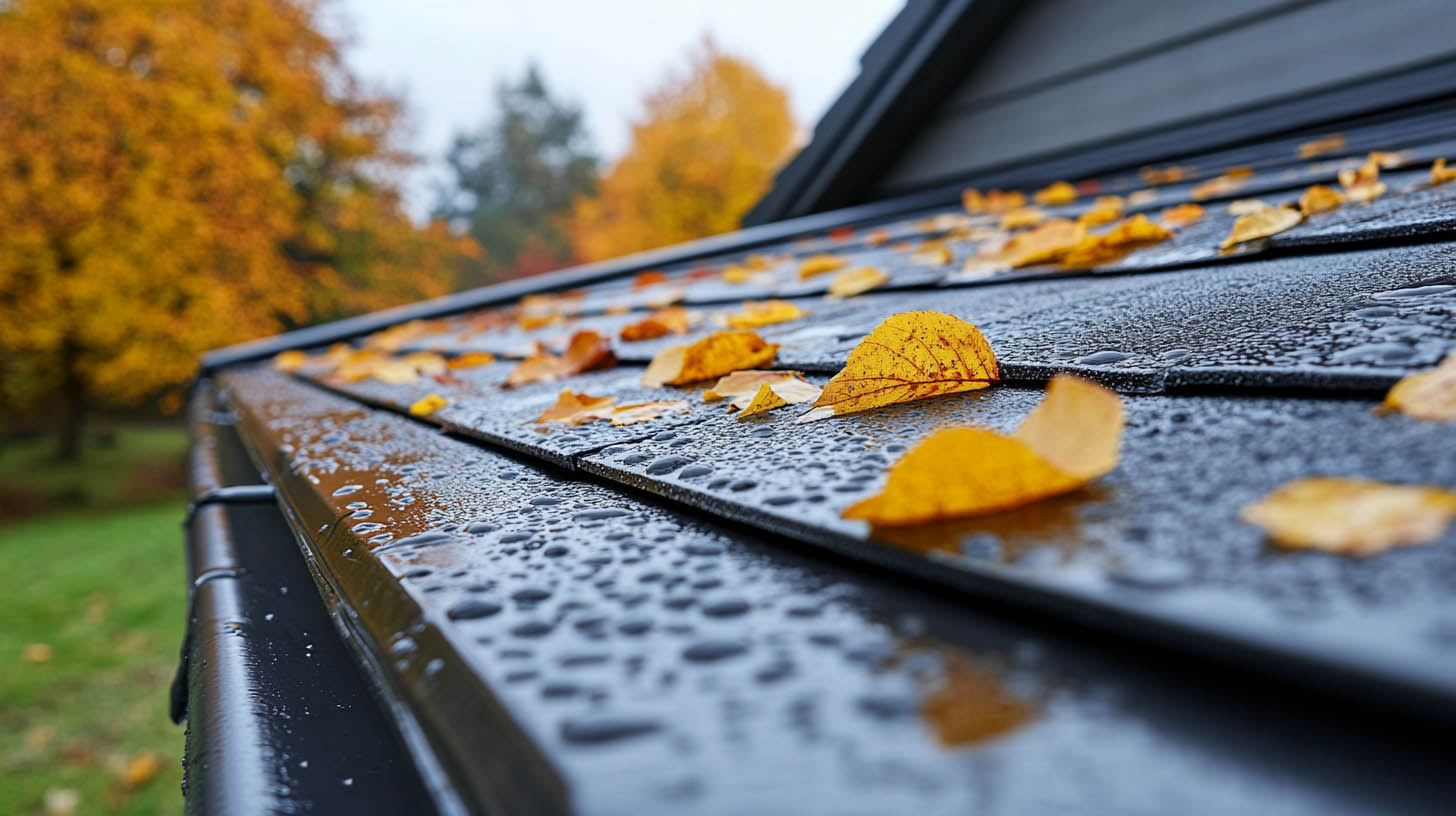
Fascia, Soffit & Drip Edge: Protecting Your…
Wet roof decking does not always mean rot, but the source matters. Learn how moisture…

Whether you need a flat roof, shingles, or a metal roof, UNITED is here to help. Ask us about our insurance claims services today!
If your roof is in need of repairs, replacement, or a complete overhaul, UNITED is here for you. Ask us about our remodeling & additions services today!
United Contracting & Roofing is a local, family owned and operated business. Our focus is long lasting relationships with our clients with quality service.
If you see water running down the fascia or siding during a rainstorm, the gutter may seem like the obvious problem. Sometimes it is. But in other cases, the water never enters the gutter correctly in the first place.
Several parts of the roofing system come together at the roof edge. Shingles shed the water, drip edge directs it away from the roof, and gutters collect it and carry it toward the downspouts. The fascia sits directly behind this drainage path. A problem with any of these components can send water somewhere it doesn’t belong.
Where you see the water can provide useful clues about where the problem starts.
Drip edge is a narrow piece of metal installed along the edges of the roof. It directs rainwater away from the fascia and into the gutter while helping protect the edge of the roof decking. When the drip edge is missing, damaged, bent, or improperly positioned, water may follow the underside of the roof edge instead of dropping cleanly into the gutter. You may see it running between the gutter and fascia or leaving stains on the fascia below.
The position of the shingles matters too. At the eaves, shingles and drip edge need to direct runoff into the gutter. A problem with that transition can allow water to reach the fascia even when the gutter itself is in good condition.
The gutter needs to sit in the path of water leaving the roof. If it has pulled away from the fascia, sagged, or shifted over time, runoff may pass through the gap behind it.
Sometimes the condition of the fascia contributes to the problem. Many residential gutters attach directly to the fascia board. If repeated moisture has softened or deteriorated the wood, gutter fasteners may begin to loosen. That can allow the gutter to pull farther away from the roof edge. In that situation, the visible gutter problem and the damaged fascia may have the same underlying cause.
Watching what happens during rainfall from a safe location can help narrow down the possibilities.
Water spilling over the front edge often points toward a drainage problem within the gutter system. Leaves and other debris may be blocking the gutter or downspout. The gutter may not have enough capacity for the amount of runoff reaching that section. Its slope may also prevent water from moving efficiently toward the downspout.
Water consistently appearing between the gutter and fascia points toward a different set of possibilities. The drip edge, shingle overhang, gutter position, or condition of the roof edge may deserve closer attention.
These observations won’t provide a complete diagnosis on their own. Report your observations to your roofing professional when they come to investigate the issue to help them determine where to begin looking.
If the problem only happens in one section of the house, look at the roof above it.
Roof valleys collect runoff from two adjoining slopes and direct that water toward a much smaller area at the roof edge. Intersecting rooflines can create similar concentrations. An upper roof may also discharge water onto a lower section before it eventually reaches the gutter.
As a result, one short section of gutter can handle considerably more water than the rest of the system. During a light rain, everything may drain normally, but a heavy downpour can reveal where the system struggles to keep up.
Debris can make the problem worse. Leaves and pine needles tend to collect in valleys and gutters, slowing water in the same areas that may already handle concentrated runoff.
Fascia boards can handle normal exposure to outdoor conditions. However, they should not remain wet every time it rains as repeated moisture may eventually cause wood fascia to soften or deteriorate. Paint can peel, staining may appear, and gaps can develop between components along the roof edge. As deterioration progresses, gutter fasteners may have trouble maintaining a secure attachment.
This can create an ongoing drainage problem. Water reaches the fascia, the fascia deteriorates, and the gutter begins to move out of position. That movement can allow even more water behind the gutter.
Replacing damaged fascia addresses the deterioration, but the repair also needs to address the reason the fascia stayed wet. Otherwise, the new material may eventually succumb the same conditions.
Water behind a gutter can involve several parts of the roof-edge drainage system. The appropriate repair depends on where that system has broken down.
A roofer may find damaged or improperly positioned drip edge, a gutter that needs adjustment, deteriorated fascia or roof-edge materials, a blockage, or a section that receives concentrated runoff from the roof above. In some cases, more than one issue contributes to the problem.
Finding the source first prevents unnecessary repairs and gives the contractor a better chance to correct the entire drainage path.
If you regularly see water behind your gutters, stains on the fascia, peeling paint, or a gutter pulling away from the house, have the roof edge inspected. The problem may extend beyond the gutter itself, and many of the important details are difficult to evaluate safely from the ground.
United Contracting & Roofing offers complimentary roof inspections throughout northern Georgia and upstate South Carolina. Our team can evaluate the gutters, fascia, drip edge, roof edge, and surrounding drainage patterns to determine where the water is coming from and what needs attention. Our professional roofers can address the source of the water damage, leaving you with a roof that will not continue to fail in the same way. Give us a call today, and let’s schedule your roof inspection.
Wet roof decking does not always mean rot, but the source matters. Learn how moisture…
Water behind your gutters can point to drip edge, fascia, gutter, or drainage problems. Learn…
Reach out to us today and get a FREE inspection on your roof.