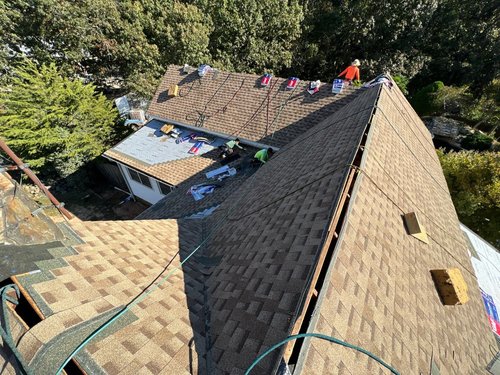
Why Proper Roof Installation Matters
Quality roofing materials need proper installation. Learn which installation details affect roof performance and longevity.
Whether you need a flat roof, shingles, or a metal roof, UNITED is here to help. Ask us about our insurance claims services today!
If your roof is in need of repairs, replacement, or a complete overhaul, UNITED is here for you. Ask us about our remodeling & additions services today!
United Contracting & Roofing is a local, family owned and operated business. Our focus is long lasting relationships with our clients with quality service.
Choosing quality roofing materials matters. Shingles, underlayment, flashing, and ventilation products all affect how well a roof handles years of sun, rain, wind, and changing temperatures. For homeowners in northern Georgia and upstate South Carolina, products designed for the Southeast climate can make a meaningful difference.
Those materials still depend on proper installation to perform as intended. Two homes can have the same high-quality shingles and experience very different results over time because of differences in fastening, flashing, ventilation, decking preparation, and other details.
Homeowners should pay attention to the products going onto their roof. But they should pay just as much attention to who is installing them and how the entire roofing system will be put together.
Manufacturers provide detailed instructions for installing their shingles, right down to where contractors should place the nails. These specifications help shingles seal properly and resist wind. Incorrect nail placement can interfere with that seal and leave shingles more vulnerable during storms.
These details become especially important in a region that regularly experiences strong winds and heavy rain. A quality architectural shingle may offer excellent wind resistance when installed according to manufacturer specifications. The product alone cannot compensate for improper fastening or other installation mistakes.
Some of the most important installation work happens where different parts of the roof meet. Chimneys, vents, valleys, walls, and pipe penetrations all interrupt the roof’s otherwise continuous surface. Contractors use flashing to direct water around these areas and back onto the roof, where it can drain safely.
Proper flashing requires careful placement and layering. If water can get behind it, even excellent shingles cannot prevent a leak. That is why water infiltration problems often appear around roof penetrations and transitions rather than across open sections of shingles.
Underlayment sits beneath the finished roofing material and provides secondary protection for the roof deck. Once the roof is complete, homeowners may never see this layer again. However, its installation plays a huge part in waterproofing your roof.
Proper overlaps, fastening, seam placement, and transitions help underlayment provide the protection it was designed to offer. The condition of the roof deck underneath matters too. New materials need a sound, properly prepared surface. If tear-off reveals deteriorated decking, the contractor may need to address that damage before installing the new roofing system. Each layer has a specific job, and each layer must be correctly so they work together.
Ventilation provides another good example of why products and installation go hand in hand. Roof vents are essential, but simply having them does not guarantee adequate attic airflow. A balanced system needs sufficient intake and exhaust. Ridge vents also require proper sizing, placement, and installation to work as designed. When the system functions correctly, ventilation helps manage attic heat and moisture.
Attic ventilation is extremely important for roofs throughout the Southeast. Long, hot summers create significant heat in the attic, while our humid climate makes moisture management an ongoing concern. Proper ventilation helps reduce that stress on the roofing system.
None of this means homeowners should choose roofing materials based on installation alone. A well-installed roof still needs products suited to the home, climate, budget, and expected lifespan. However, it’s important to distinguish the difference between the roles of quality materials and quality workmanship. Quality products give your roof the durability and performance characteristics you are paying for. Proper installation allows those products to deliver that performance.
This can also affect warranty options. Manufacturer warranties often carry specific requirements for installation, ventilation, system components, and contractor qualifications. Before choosing a roofing system, ask what warranty applies and what requirements the completed roof needs to meet.
Homeowners can learn a lot about a roofing contractor before installation begins. Ask who will oversee the job, whether the crew follows manufacturer specifications, how the contractor will handle flashing and ventilation, and what happens if they uncover damaged decking during tear-off. Clear answers give you a better understanding of the work that’s included in the contract.
United Contracting & Roofing assigns a dedicated project manager to every job site to help maintain quality and efficiency throughout the project. Our team looks at the roof as a complete system, from the condition of the decking to the materials installed on top.
If you are considering a roof replacement, United offers complimentary inspections throughout northern Georgia and upstate South Carolina. We can evaluate your current roof, explain your options, and help you choose quality materials backed by the installation they need to perform properly for your home.
Quality roofing materials need proper installation. Learn which installation details affect roof performance and longevity.
Learn what can happen to your roof in the days after a major storm and…
Learn how not fixing roof damage can turn a simple fix into a larger project…
Reach out to us today and get a FREE inspection on your roof.